
If you have ever flipped over a product label or scrolled past an ad promising a $500 shopping spree, you have seen the phrase. This guide is a plain-English version of no purchase necessary sweepstakes rules explained for everyday shoppers: what the phrase actually requires of a sponsor, how the free alternative way to enter works, which clauses in the official rules decide whether you win, and how to recognize a promotion that is really just a scam collecting card numbers.
What “No Purchase Necessary” Actually Means
In the United States, a sweepstakes has three parts: a prize, a winner chosen by chance, and no requirement to pay anything to enter. Remove the last part and you no longer have a sweepstakes — you have a lottery, which private companies cannot run. That is the whole reason the phrase exists. “No purchase necessary” is not a courtesy the sponsor chose to extend; it is the language that keeps the promotion legal.
That leads to the sentence you will see in nearly every set of rules: a purchase will not improve your chances of winning. Sponsors are expected to make that clear, because implying otherwise is the kind of claim that draws scrutiny from the Federal Trade Commission and state attorneys general under consumer protection law. Sweepstakes are regulated mainly at the state level, with additional federal rules covering promotional mailings and deceptive advertising, so the exact required wording varies from promotion to promotion.
Two clarifications matter more than the legal theory:
- “No purchase necessary” does not always mean zero cost. If the free entry method is a mail-in card, you still buy the stamp and envelope. Some rules allow a free online entry form instead, which costs only your time and your data.
- It does not mean the prize is obligation-free. Taxes, travel to a destination prize, and paperwork usually fall to the winner, and the rules will say so.
It also does not apply to every promotion. Skill-based contests, where winners are judged on an entry rather than drawn by chance, do not legally need a free entry route. If a promotion calls itself a contest and still says “no purchase necessary,” that phrase is marketing rather than a legal requirement.
How the AMOE Path Works, Step by Step
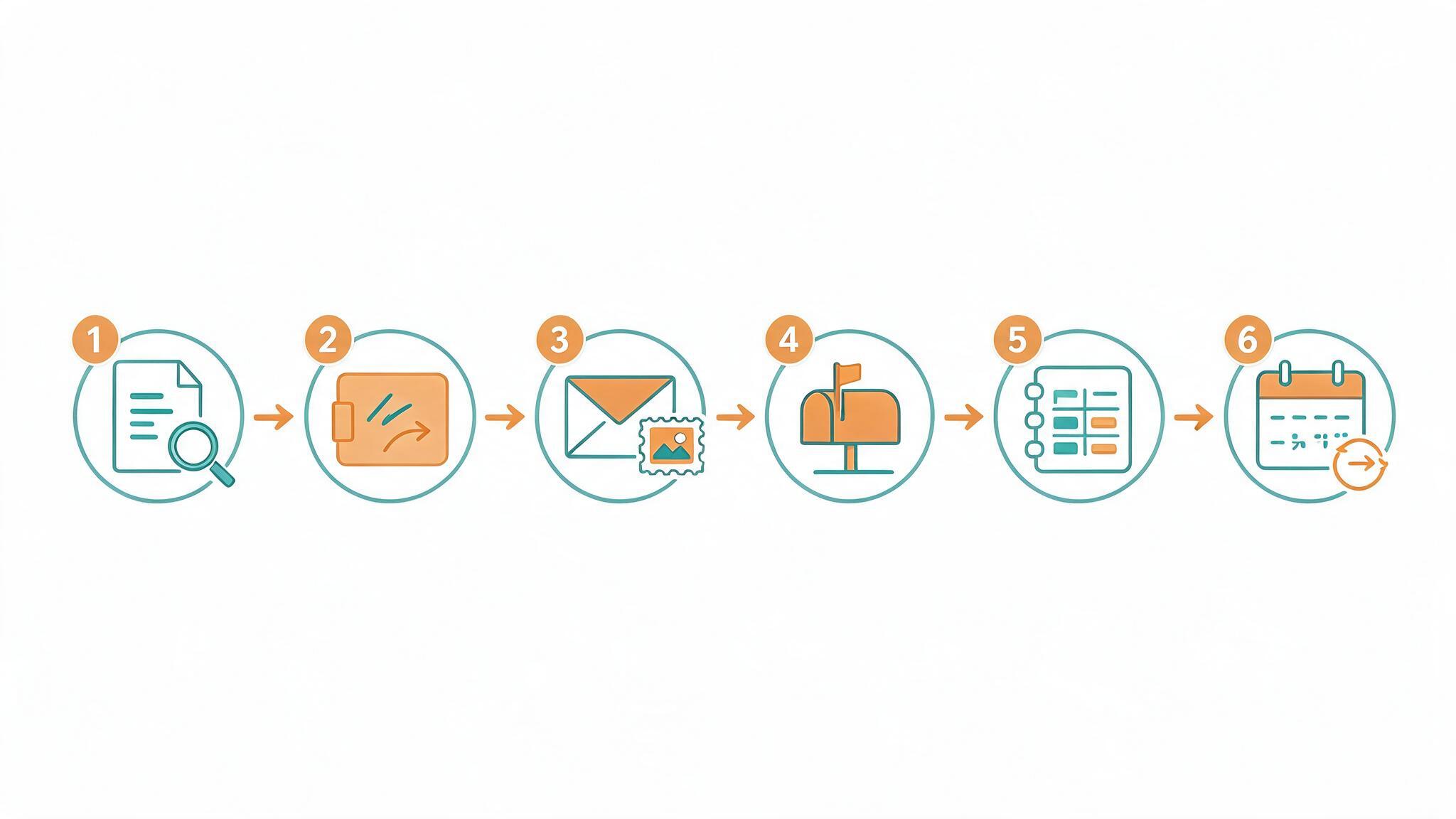
The free route into a sweepstakes is called an alternative method of entry, or AMOE. It is not a secret handshake — it is spelled out in the official rules, usually under a heading like “How to Enter Without Purchase.” Mechanics differ between promotions, but the shape of the process is remarkably consistent:
- Open the official rules page. Find it on the sponsor’s own website, not a third-party sweepstakes list. Confirm the entry period, eligibility, and the exact AMOE instructions.
- Check what the free entry must contain. Many promotions ask for a handwritten card of a specific size with your name, address, email, and phone number. Handwriting rules exist to block bulk machine-printed entries, so a printed card may be disqualified.
- Note the mailing address and envelope rules. Some promotions require a handwritten envelope; others accept a printed label. Follow whichever version the rules specify.
- Send one entry per envelope unless told otherwise. Most mail-in AMOEs limit entries to one per outer envelope, and duplicates inside a single envelope are typically discarded.
- Log what you sent and when. Record the sponsor, entry period, date mailed, and method. If a dispute arises later, your record is the only proof you have.
- Repeat within the allowed limits. Many promotions allow one mail-in entry per day or per week during the entry period. The rules state the cap.
Online AMOEs work the same way with less postage: you complete a form on the sponsor’s site, submit it, and receive whatever confirmation the rules promise. Either way, an entry counts only if it arrives inside the entry period and matches the format described. Postmarking on the last day does not guarantee anything if the rules require delivery by a certain date.
The Clauses in Official Rules That Decide Whether You Win
Official rules are long because they are written to survive a legal challenge, not to be read for pleasure. You do not need every word, but you do need six clauses. Everything else is boilerplate.
| Clause | What to check |
|---|---|
| Eligibility | Age minimum (often 18 or older), residency limits, and whether employees of the sponsor and their households are excluded. “Void where prohibited” means some states are out. |
| Entry period | Exact start and end dates and times, including the time zone. An entry postmarked before the deadline but delivered after it may still be rejected. |
| Prize description and value | What the winner actually receives, the approximate retail value, and whether the prize is transferable or can be exchanged for cash. Vague prize descriptions are a warning sign. |
| Odds of winning | Many rules state odds based on entries received, or state that odds depend on the number of entries. If no odds statement appears anywhere, treat that as a gap. |
| Winner selection and notification | How winners are drawn, how they are contacted, and how long they have to respond. Missing the response window is the most common way people lose a prize they already won. |
| Taxes and releases | Who pays taxes, what forms a winner must sign, and whether the sponsor may use your name and photo for publicity. |
If any of these six is missing or worded so vaguely that you cannot answer a basic question, that is your signal to walk away — no matter how attractive the prize looks.
Red Flags That a “No Purchase Necessary” Offer Is a Scam
Real promotions never ask a winner to pay to collect a prize. That single rule filters out most sweepstakes scams on its own. Beyond it, watch for these patterns:
- A fee to “release” or “ship” your prize. Requests for gift cards, wire transfers, cryptocurrency, or payment apps are the signature of a scam. Legitimate sponsors ask for nothing upfront.
- Requests for your Social Security number, bank login, or card details before you have won. A sponsor may need a tax form from an actual winner, but never from a random entrant.
- No official rules, no sponsor name, no end date. If you cannot find who is running the promotion and when it closes, there is nothing to verify.
- Pressure to act within minutes. Real sweepstakes run entry periods measured in weeks. Countdown timers and “respond in 10 minutes” messages are manipulation.
- Social media ads for “unclaimed pallets” or “abandoned Amazon returns.” These borrow the sweepstakes look. Our guide to spotting fake liquidation pallet ads walks through the specific red flags, including fake tracking numbers and pay-only-by-app demands.
- Entries that require a purchase “to verify” your free entry. That defeats the entire premise and usually violates the promotion’s own terms.
If you spot one of these, report it. The FTC accepts complaints through its consumer reporting site, and state attorneys general and the Better Business Bureau also log sweepstakes complaints. Reporting takes a few minutes and helps shut down campaigns that target the same people repeatedly.
Practical Habits for Entering Without Spending Money
- Use a dedicated email address. Entries generate marketing mail. A separate inbox keeps your primary account clean and makes winner notifications easy to search for.
- Track entries in a spreadsheet. Columns for sponsor, prize, entry period end date, method, and date submitted. When a notification arrives months later, you will know whether it is real.
- Set calendar reminders for recurring entries. If a promotion allows a daily mail-in or online entry, a repeating reminder is what turns one entry into thirty.
- Batch your mail-in entries. Prepare cards and envelopes in one sitting, then mail them on a schedule.
- Skip paid “entry services.” Many promotions void entries submitted by third parties or automated tools, and services that charge for entries are a common way to lose money on a free activity.
- Verify the sponsor before you enter anything. Start with vetted listings rather than ads. Our guide to finding legitimate no purchase necessary sweepstakes covers how to check a sponsor’s identity and where official rules are normally published.
Taxes and Hidden Costs of a “Free” Prize
A prize is income. In the United States, the fair market value of what you win is generally taxable, and sponsors commonly ask winners to complete a tax form before releasing a prize and may issue an information return when the value meets IRS reporting thresholds. Those thresholds and forms change over time, so confirm current requirements with the IRS or a qualified tax professional rather than relying on a blog post — including this one. This is general information, not tax advice.
Beyond tax, read the prize description for costs that stay with you: shipping on a bulky physical prize, airfare and hotel for a “trip” that turns out to be event tickets only, installation or delivery fees, and insurance on something expensive. A prize you cannot afford to accept is not a win in any practical sense.
A Quick Pre-Entry Checklist
- Official rules found on the sponsor’s own site?
- Entry period still open, with the time zone noted?
- You meet the age and residency requirements?
- AMOE instructions clear, including card size and envelope rules?
- Prize description specific, with an approximate retail value?
- No fee, no card details, no pressure to respond immediately?
- Entry logged in your tracking sheet?
Work through those seven questions before you spend a stamp or a minute on an entry, and the phrase “no purchase necessary” stops being marketing noise and becomes a set of instructions you can actually follow.