
If you have ever walked into Target the day after a holiday and found the same patio set you wanted at a much lower price, you have seen the Target clearance markdown schedule in action. The catch is that Target does not publish one master calendar that tells shoppers when every item will drop. Clearance timing varies by store, department, inventory, and season. What you can do is learn the typical markdown ladder, read the tags correctly, and build a store-check routine that catches the good drops without turning every trip into a wasted afternoon.
How the Target clearance markdown schedule really works
Target clearance is not a single event. It is a series of store-level decisions. A store may mark down seasonal goods when a new set arrives, when inventory is too high, or when an item is being discontinued. That is why two Target stores in the same city can have different prices on the same item. It also means any schedule you see online is a lead, not a promise.
Many clearance items follow a familiar ladder: 30% off, then 50%, then 70%, and sometimes 90%. Not every item takes every step. Some skip a level. Some sell out at 30%. Some are pulled from the floor and sent to salvage or donation before they ever reach 90%. The percentage on the sticker is a useful clue, but the final price on the tag or scanner is the number that matters.
Markdowns often cluster around seasonal resets: after Christmas, after back-to-school, at the end of summer, and when holiday sets change over. Many shoppers also treat early-week and midweek trips as scouting days because stores tend to reset signage and endcaps around then. Treat that as a practical habit, not a guaranteed Target rule. The only reliable signal is the price tag in front of you.
How to read Target clearance price tags
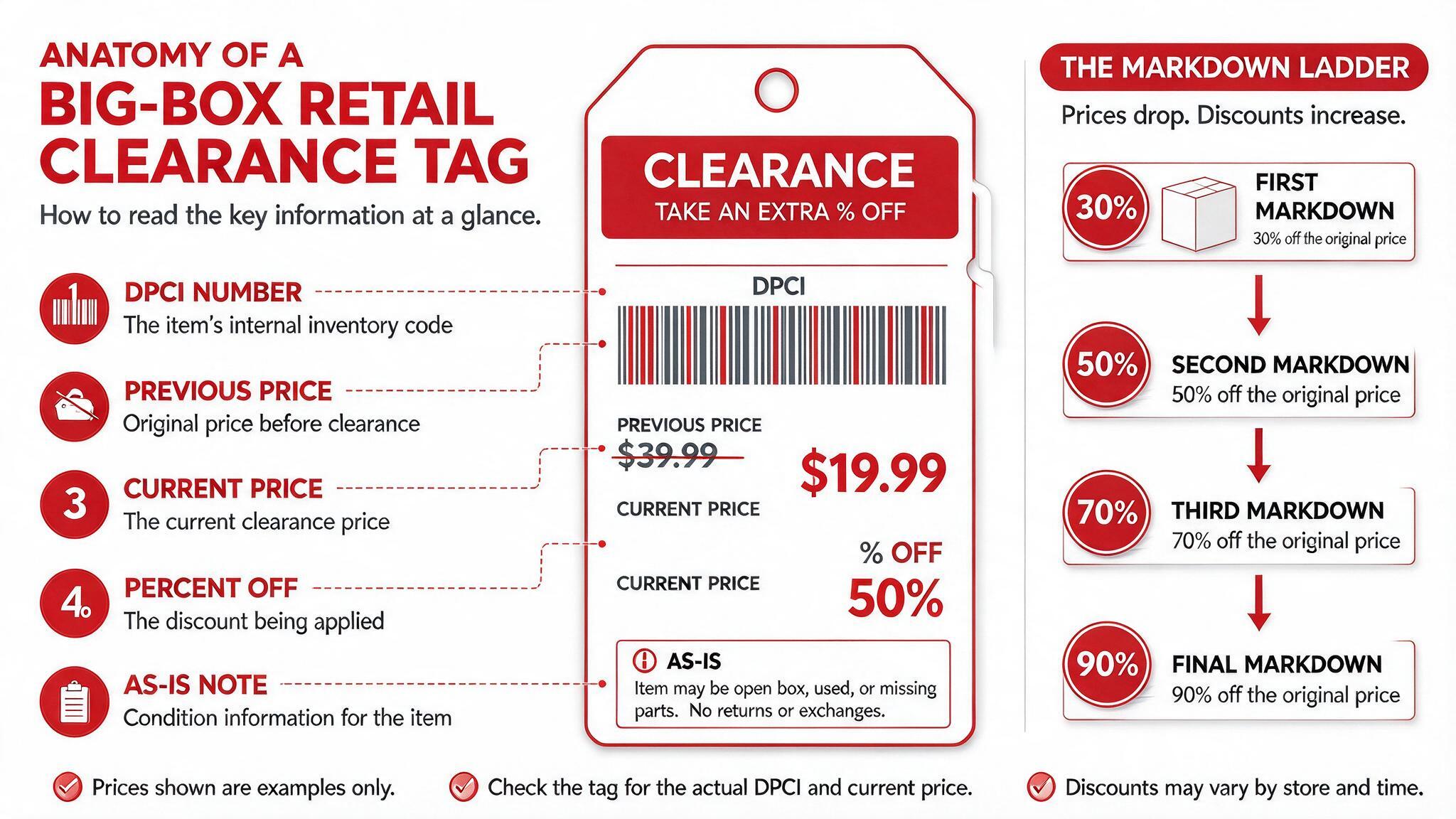
Target price tags carry more information than most shoppers notice. A typical tag includes the item name, the current price, and a DPCI number, which is Target’s in-store department, class, and item code. Clearance tags often show the markdown percentage and the previous price. Some tags also note that an item is as-is, repackaged, or missing parts. Read those notes before you celebrate a low price.
Use the Target app or an in-store price scanner to confirm the price. Shelf tags can be outdated, and an item may scan lower than the sign. If the tag and the scanner disagree, ask a team member to check the current price before you buy. Do not peel, swap, or cover tags. That is not a bargain strategy; it is a good way to create a problem at checkout.
- Check the DPCI: It helps you confirm you are looking at the right item and compare similar products.
- Compare unit price: A bigger package is not always cheaper per ounce, count, or square foot.
- Inspect as-is and repack items: Count the pieces, check the instructions, and confirm the return terms before buying.
- Scan before you commit: The scanner is the final word on the current price.
When to check for deeper markdowns
A practical routine beats a rumor every time. Pick one or two days a week that fit your normal errands, then do a quick loop through the departments where you actually buy. Seasonal endcaps, home organization, small appliances, apparel, and holiday sections are common places to find clearance. Grocery and perishable markdowns follow different rotation rules, so check dates and storage needs carefully.
After a major holiday, wait for the first big reset rather than rushing in on the holiday itself. The deepest discounts usually appear when the store needs the space back. For back-to-school, summer, and winter seasonal goods, the best window is often when the next season’s merchandise starts arriving. If you are shopping for resale, do not buy just because the percentage is high. Check completed sales, fees, and demand first.
Keep a small list of items you would buy at a discount. A clearance run is more efficient when you know your target categories. If you are new to bargain hunting, our Whitekind introduction is a good place to start before you build a weekly routine.
The real cost of a clearance run
A clearance tag only tells part of the story. The true cost includes fuel, time, storage, and the risk that you will not use or resell the item. For resellers, add platform fees, shipping supplies, and the cost of returns. A 70% off item can still be a bad buy if it sits in your garage for a year.
| Cost to track | Why it matters |
|---|---|
| Travel and time | A special trip for one item can erase the savings. Combine clearance checks with errands you already need to run. |
| Storage | Bulky items take up space. Measure before you buy and check whether the item fits your home or resale setup. |
| Resale fees | Marketplace fees, shipping, and returns reduce your margin. Factor them in before you call something a flip. |
| Tax and recordkeeping | Resale income is generally taxable. Keep receipts and consult a tax professional for your situation. |
Red flags: fake schedules and pallet ads
Be skeptical of anyone selling a secret Target clearance markdown schedule. Target does not publish a storewide calendar, and no outside list can guarantee what your local store will mark down. A paid schedule may be a recycled list of guesses. A social media post that promises unclaimed Target pallets is another red flag. Legitimate liquidation sourcing generally goes through business-to-business channels or vetted auction platforms, not a random direct message.
Watch for these warning signs:
- Pressure to pay immediately with a gift card, crypto, or payment app.
- Claims that every item is 90% off or that a pallet is guaranteed to contain high-value electronics.
- No business name, no physical address, no terms, and no inspection period.
- Requests to move the conversation off a legitimate auction platform.
Before you buy from a liquidation seller, check the Better Business Bureau, your state attorney general, and the platform’s dispute policy. Report suspected scams to the FTC and your state consumer protection office. If a deal depends on secrecy and speed, walk away.
A simple weekly Target clearance routine
Start with a short route: seasonal endcaps first, then the departments on your list. Scan anything that looks interesting. Buy only what you will use or can realistically resell. Photograph receipts and keep a simple log of what you paid. Review your log monthly so you can see which categories actually pay off.
The Target clearance markdown schedule is less about memorizing a secret calendar and more about showing up with a plan. Check the tag, scan the item, do the math, and leave the rest. That approach will not catch every deal, but it will help you avoid the ones that only look good on the sticker.
2 thoughts on “Target clearance markdown schedule: How to shop the drops”