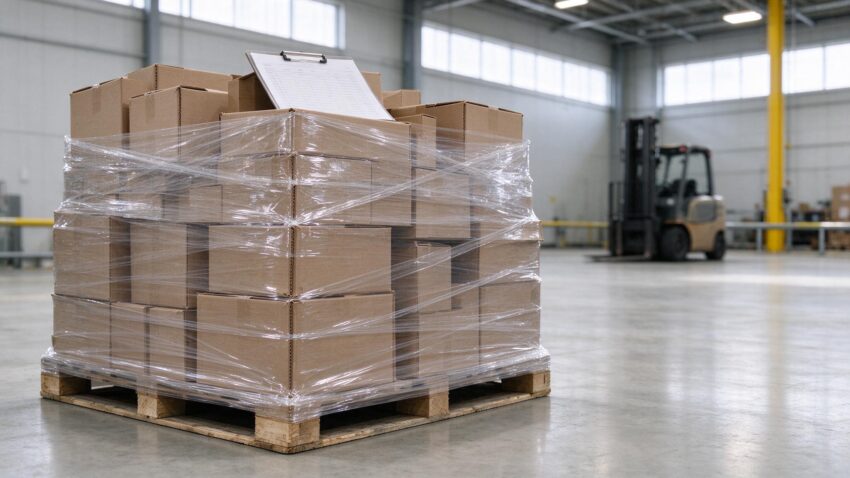
Buying customer return pallets at auction can be one of the most reliable sourcing channels for a reseller — or an expensive lesson in reading fine print. The difference usually comes down to three habits: understanding what “customer return” actually means on a manifest, calculating your true landed cost before you bid, and knowing which listings are genuine auctions and which are social media bait.
How Customer Return Pallets at Auction Actually Work
When a shopper returns an item, the retailer has a few options: put it back on the shelf, send it to a returns center for testing and repackaging, or sell it in bulk. Bulk is where auction buyers come in. Large retailers and their marketplace operators list returns by the pallet, by the truckload, or by the individual lot, and buyers bid online over a set window — usually a few days.
There are three broad listing types, and the label matters more than the photos:
- Manifested. You get an itemized list, usually a spreadsheet, with SKUs, titles, condition codes, and sometimes a retail price per unit. You know roughly what you’re buying before you bid.
- Semi-manifested. Partial data: a category, a unit count, maybe the top-selling items, but not a full line-by-line list.
- Unmanifested (blind) lots. A photo, a weight, a category, and a unit count. That’s it. Blind lots sell for less because the risk is higher — and they are the lots most often repackaged and resold as “mystery” pallets.
On mechanics: most platforms use proxy bidding, where you enter a maximum and the system bids for you. Many use a soft close, where a bid in the final minutes pushes the clock out by a few minutes. Some lots carry a reserve the seller doesn’t have to accept below. Nearly all sell as-is, with no returns and no chargebacks — once the hammer falls, the lot is yours.
Where to look: several large retailers run their own liquidation auction sites, often powered by a third-party marketplace operator, and established liquidation marketplaces such as B-Stock and Liquidation.com host thousands of lots at once. Regional auctioneers and industrial surplus houses also run returns auctions, sometimes in person. If a platform publishes completed-lot results, browse those first — what similar lots actually sold for is more useful than any estimate in an article.
How to Read a Manifest and Condition Codes
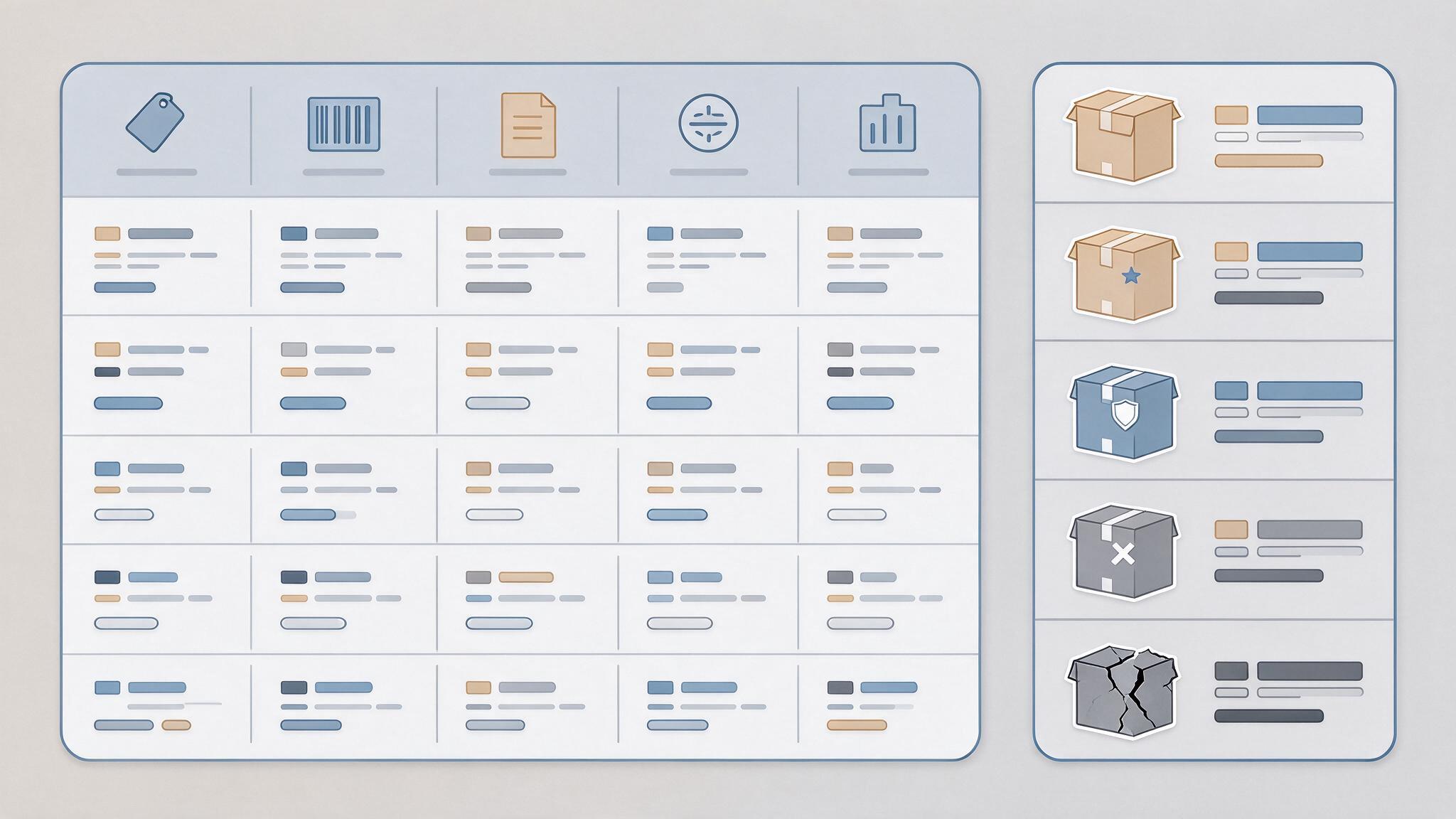
A manifest is only as useful as the code legend that comes with it. Retailers and marketplaces each use their own shorthand, and the same word can mean different things on two different sites. Before you bid, find the platform’s condition-code legend — usually linked near the lot description or in the help section — and read it line by line.
Labels you’ll run into include:
- New / new in box — unopened, but not guaranteed undamaged. Boxes get crushed in transit.
- Like new / open box — packaging opened or missing; the item itself is typically complete.
- Used – good / acceptable — cosmetic wear, possibly missing accessories.
- Defective / salvage / parts only — not expected to function. Value is in parts or scrap.
- Customer returns (mixed) — the honest catch-all. Expect a spread: some unopened, some used, some junk.
Three things to verify before you trust a manifest:
- Is it the full list or a sample? Many lots show only the first rows as a preview. A preview tells you the category mix; it does not tell you the ratio of good units to broken ones.
- Do the titles and values line up? If a row says “wireless earbuds” at a retail value that clearly matches a charging cable, the manifest has been padded.
- Is the category mix consistent? A “consumer electronics” lot that is mostly phone cases and screen protectors is technically electronics and practically worth far less.
Also check for hazmat and lithium-battery items. Many carriers won’t ship loose lithium batteries or aerosols by standard ground freight, and a lot full of them can become a disposal problem you pay for. If the manifest is silent, ask the seller before bidding.
What Buying Customer Return Pallets at Auction Really Costs
The hammer price is only the first line. Build a landed-cost worksheet for every lot you consider, and use it to set your ceiling.
| Cost line | What to check |
|---|---|
| Hammer price | Your maximum bid, decided before the auction opens. |
| Buyer’s premium | Some platforms add a percentage on top of the winning bid. Check the fee schedule — it can move your ceiling a lot. |
| Sales tax | Charged in most states. A resale certificate may exempt you if you’re buying to resell; rules vary by state, so confirm with your state revenue department. |
| Freight | Pallet shipping, liftgate service, residential delivery surcharge, or your own fuel and truck rental. |
| Unloading | Do you need a pallet jack, a loading dock, or a rented truck with a liftgate? |
| Storage and pickup window | Many sellers charge daily storage once the pickup deadline passes. |
| Labor and sorting time | Testing, cleaning, photographing, and listing every unit. The cost new buyers forget. |
| Disposal | Broken items still have to leave your garage. Recycling and dump fees are real. |
Worked example with hypothetical numbers, purely to show the math: win a lot at $400, a 10% buyer’s premium adds $40, sales tax adds roughly $35, freight and liftgate add $150 — about $625 landed before labor. If you expect to recover half of a 50-unit lot as sellable at an average of $12 each, that’s $300 in revenue, a loss. Run that same math on the lots you’re watching and you’ll see why a cheap blind lot is often a worse deal than a higher-priced manifested one.
How to Set a Maximum Bid and Stick to It
- Price the lot, not the story. Ignore “total retail value” claims. Estimate what you can realistically sell, at what price, and how slowly.
- Assume you won’t sell everything. Some units will never move at any price. Discount your revenue estimate for that.
- Enter a proxy bid at your ceiling and walk away. Live bidding in the final minutes is where budgets die.
- Expect soft-close extensions. An auction that keeps adding time is working as designed — and it’s designed to keep you bidding.
- Check logistics before bidding. A $50 lot 300 miles away is not a $50 lot.
- Read the deposit and payment rules. Many platforms require a card on file or a deposit, with payment due in a short window after close.
Red Flags: Fake “Unclaimed Pallet” Ads and Off-Platform Sellers
The most common returns-pallet scam isn’t at auction — it’s on social media. Ads promising “unclaimed Amazon return pallets” or “guaranteed electronics” for a flat fee, posted by a page with no business address, are a recurring problem. Genuine marketplaces publish the seller, lot number, manifest, fee schedule, and pickup location.
- Payment by Zelle, Cash App, friends-and-family transfers, gift card, or cryptocurrency — none offer buyer protection.
- No manifest and no lot number, just a photo of a shrink-wrapped pallet.
- A seller who wants to move the deal into DMs or a private chat app.
- Guarantees about what’s inside. Real manifested lots describe condition; they don’t promise resale value.
- Prices that look too good for the category.
- No physical address and no state business registration to check.
Before sending money, look the business up in your state’s business registry and check its record with the Better Business Bureau. The FTC’s rules against deceptive advertising apply to pallet sellers as much as anyone, so a listing that misrepresents what’s in a lot can be reported to the FTC and your state attorney general. For a longer checklist, see how to spot fake liquidation pallet ads.
Pickup, Sorting, and Reselling What You Win
Confirm the pickup details before the auction closes: dock height or ground level, whether staff load for you, appointment requirements, and what equipment you’re allowed to bring. Straps, gloves, and a pallet jack save a lot of grief.
Sort into four piles: sell as new or open-box, test-and-sell as used, parts or repair, and recycle or donate. Describe condition honestly on every listing. A used item listed as new brings returns, negative feedback, and platform penalties — Amazon has category gating and condition requirements for used goods, and eBay expects accurate condition disclosure.
Keep records of every lot’s cost, fees, and revenue. Side-hustle income is reportable to the IRS and usually lands on Schedule C. That’s general information, not tax advice — a CPA can tell you what applies to your situation.
Returns pallets are best treated as one channel among several. Clearance shelves are lower-risk and easier to predict: the Target clearance markdown schedule and the Costco price tag asterisk both give you a way to buy at a known discount with a return policy behind you. Use auctions for volume, clearance for margin, and never let either one eat your storage space.
1 thought on “Buying Customer Return Pallets at Auction: A Buyer’s Guide”