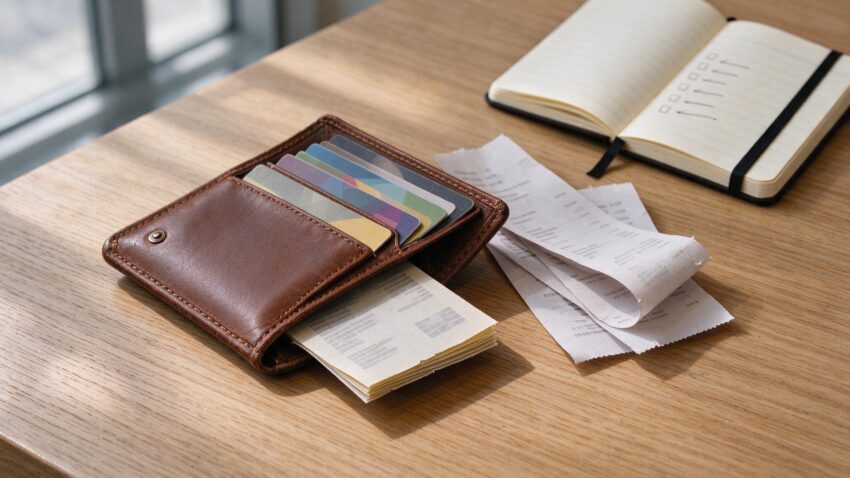
Check Your Old Wallet: Billions in Unused Store Credits Are Expiring This Year — and the balances most likely to slip away are the small ones nobody tracks. A $7 merchandise credit from a return, a $25 gift card from two holidays ago, a rewards balance parked in a retailer app: each is easy to forget and easy to forfeit. A 20-minute audit, a one-page spreadsheet, and a couple of calendar reminders will rescue most of it. Here is how to find what you are sitting on, sort it by deadline, and spend it on things you were already going to buy.
One honest note before we start: no one publishes a precise national tally of expiring store credit, so treat any headline figure as an estimate rather than a fact. What is well established is that unredeemed stored value, which retailers call breakage, is a real and meaningful line item in retail accounting. That is exactly why the deadlines printed on your cards and credit slips deserve a second look.
Where Unused Store Credit Actually Hides
Do the physical sweep first, then the digital one. Most households find more than they expect in both places.
- Physical spots: the wallet you retired, coat and jacket pockets, purse linings, the glove box, the junk drawer, the folder where you keep receipts, and the stack of greeting cards from showers, graduations, and holidays.
- Retailer accounts and apps: many stores hold a credit balance on your account rather than on a card, especially after an online return or a price adjustment. Log into the two or three stores you shop most and look for a wallet, payments, or store credit section.
- Loyalty and rewards programs: points that convert into store credit, birthday rewards, and app-only promotional cards often sit untouched until they quietly expire.
- Email and text messages: search your inbox for terms such as e-gift card, merchandise credit, store credit, return credit, promo card, and refund issued. Promotional e-cards are usually delivered as a code in an email and never opened.
- Paper value: rebate checks, class action settlement checks, and prepaid cards issued for mail-in rebates. These often carry the shortest windows of anything in the pile.
Sort Every Balance Into One of Four Buckets
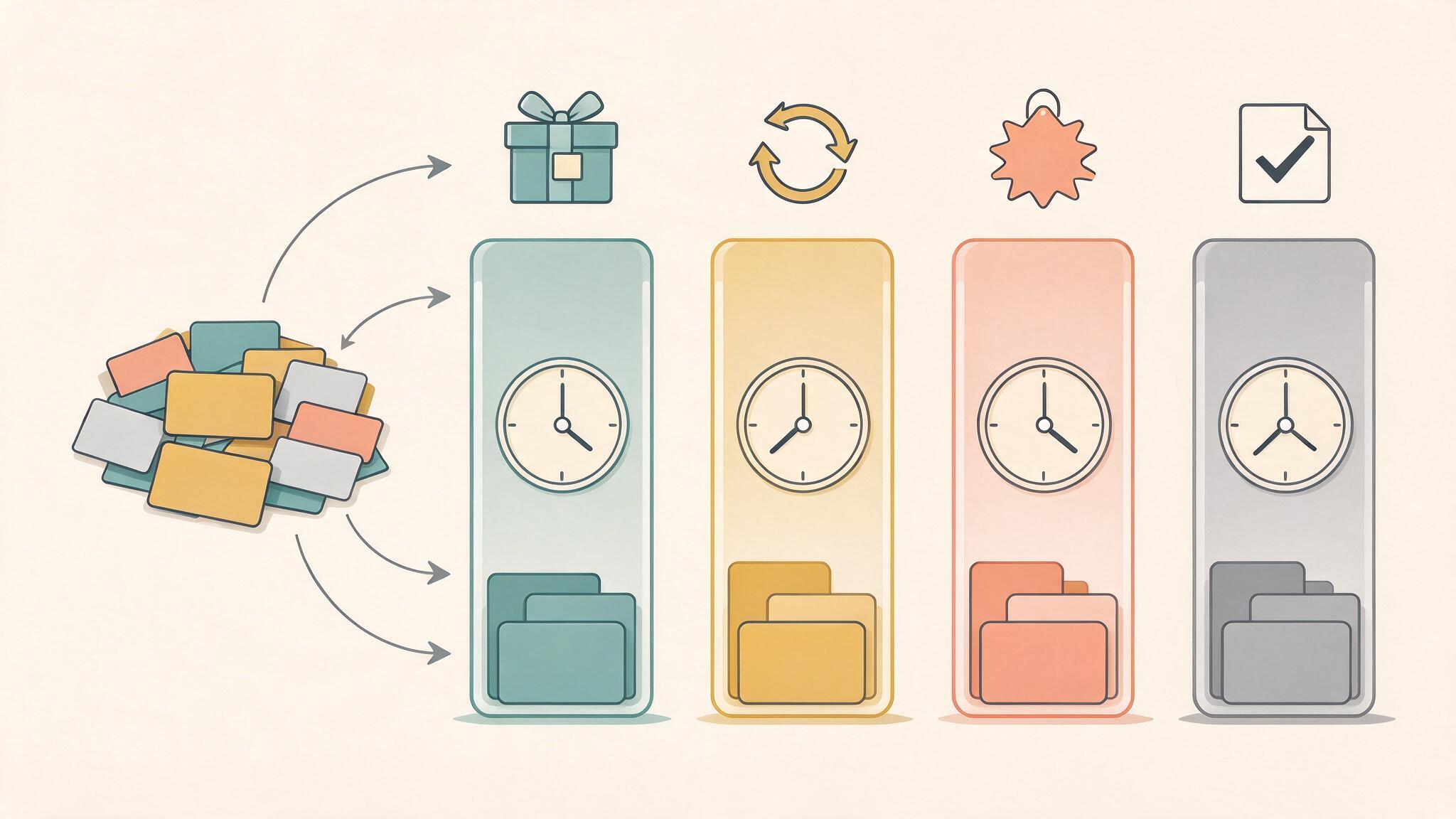
Not all stored value runs on the same clock, so the order in which you spend matters as much as the total. Once you have a pile of cards, codes, and slips, sort them into four groups.
| Bucket | How you got it | What usually governs the deadline | Spend priority |
|---|---|---|---|
| Sold gift card | You bought it or received it as a gift | Federal rules generally require gift cards sold to consumers to stay valid at least five years from purchase or last load, with limits on fees | Medium |
| Merchandise or return credit | Issued for a return, price adjustment, or goodwill gesture | The store’s own policy, which can be far shorter | High |
| Promotional value | Free promo cards, loyalty points, app offers, giveaway credits | Issuer terms; promotional cards are commonly exempt from the five-year rule | Highest |
| Paper value | Rebate checks, settlement checks, rebate prepaid cards | Whatever is printed on the check or card | High |
Rank by risk, not by dollar amount. A $4 promotional credit that dies in two weeks matters more than a $50 gift card with years left on it. Work the top of the list first, and the cheap, fast-expiring balances stop being the ones that vanish.
Check Your Old Wallet: Billions in Unused Store Credits Are Expiring This Year, So Read the Terms Before You Spend
Before you spend a single balance, confirm what the issuer actually allows. Look for these five details, usually printed on the back of a card or listed in the account’s terms page:
- The expiration date, and whether using or reloading the card resets it.
- Inactivity or dormancy fees. Federal rules restrict these on gift cards sold to consumers and require disclosure, but the details vary, so read the fine print rather than assuming.
- Where the balance works: online only, in store only, or both. A card that works only in store is harder to spend if the nearest location is far away.
- Partial payment rules. Some registers accept multiple cards in one transaction, while some online checkouts cap how many you can enter per order.
- Replacement policy if the card is lost or the code is misplaced, and whether a balance can be moved to another card.
If something looks expired, do not throw it away immediately. Some issuers will still reissue or honor a balance, and many states have unclaimed property laws that require companies to remit certain unredeemed balances to the state after a dormancy period. Search your state treasurer’s or comptroller’s official unclaimed property database — it is free, and you should never pay a third-party finder a percentage of what they locate for you.
Turn Small Balances Into Real Savings
- Buy boring essentials. The best use of a $6 balance is laundry detergent, printer paper, or pantry staples you were buying this week anyway. Do not let a deadline push you into buying something you would not otherwise purchase; that turns free money into clutter.
- Stack credit with clearance timing. Applying stored value during a markdown wave stretches every dollar further. Our retail seasonal clearance schedule by month shows when categories typically drop, and the Target clearance markdown schedule breaks down how one large chain runs its cycle.
- Split the tender. In store, a cashier can usually run several cards as separate payments on one purchase. That is the fastest way to clear a stack of small balances in a single trip.
- Do not cash out at a steep discount. Selling a card for well under face value rarely makes sense unless you genuinely cannot use it, and resale carries risk if the buyer disputes the balance.
- If you resell, count credit as margin. Sourcing inventory with a store credit you already hold lowers your real cost per unit. Our guide to liquidation pallet profit margins shows how to fold that discount into your numbers.
Red Flags to Skip
- Unsolicited texts or emails claiming your card is about to expire and offering to check it for you. Use only the phone number printed on the card or the retailer’s official app.
- Third-party balance-check sites asking for the card number plus the PIN. Those two pieces of information are the cash.
- Deeply discounted gift cards offered by strangers on social media. The balance can be drained or the card deactivated after you pay.
- Survey or quiz pages that promise a free gift card in exchange for personal details. The same pattern shows up in fake liquidation pallet ads, where a too-good offer exists to collect a payment or your information.
A Ten-Minute Tracking System That Works
You do not need software. A single spreadsheet with one row per balance is enough, with columns for the issuer, the bucket type, the current balance, the date issued, the expiration date, the last four digits of the card number and its PIN, and where the card physically lives. Keep PINs in a password manager rather than in a photo on your phone.
Then add calendar reminders 60 days and 14 days before each expiration date, and set a standing 15-minute review once a quarter. Adopt one rule that keeps the list from growing: any balance under $10 gets spent on the next ordinary shopping trip, no deliberation required. Do that, and the pile stops rebuilding itself between holidays.